Category: IP Unit

  • IP unit: Reflective Report

    Diversity work could be described as a phenomenological practice: a way of attending to what gets passed over as routine or an ordinary feature of institutional life.

    Ahmed, Sara. On Being Included: Racism and Diversity in Institutional Life

    Introduction

    What gets lost in translation when a multidimensional being encounters an institution that is doing DEI work that needs to be quantified and measured? What are the opportunities, challenges and risks?

    My focus on storytelling spans from self-narration to investigative journalism, the individual in relation to one another, and the individual in relation to the collective. My teaching is across institutions, courses, and modules. In what are all either non- or multidisciplinary contexts, there’s an inevitable emphasis on students leading the direction of their own journey, exploring not only who they are but who they could become. Facilitating this self-exploratory journey is an honour and an immense responsibility.  

    I’m a white person with no physical disability, and I’m fairly comfortable with the gender assigned to me at birth. I’m also queer, neurodivergent, with another condition classified as a disability (which I’m not comfortable disclosing), and I grew up in a low-income household with little to no access to financial support. All these factors shaped challenges, but also the unquantifiable privilege of being invisible. I have had, at times, the possibility of trading anonymity for safety. I am aware that not everyone is being presented with this choice. 

    We are asking students to locate their practice often based on proximity to narratives, to interrogate their work with their own positionality. A necessary exercise, it is often not facilitated in a way that allows students to participate without exposing themselves in the classroom, and it’s not necessarily contextualised within the institution they’re in. The intervention can’t be a solution to infrastructure, it’s a heartfelt attempt to open questions and foster reflection in the classroom that are as nuanced as the demographics I have the pleasure of working with. Positionality stories must be practiced critically and carefully; they are not casual attempts at empathy or identification (Cedillo & Bratta, 2019). 

    Context

    The proposed intervention is part of a lecture and workshop I will be holding at the MA Applied Imagination (Creative Enterprise Programme), where I’m Associate lecturer. Students will be approaching the last unit of the course, it will be an opportunity for self-narration and contextualisation now that they will be presenting their work, and their relationship to their work, to teaching staff, their peers, and relevant industry professionals, both during their showcase and final summative assessment.

    The workshop is planned to be part of a three-hour session: 

    • 15 mins: welcome and introduction
    • 45 mins: lecture 
    • 15 mins break 
    • 1h: workshop
    • 45 mins: discussion & feedback 

    The utility of the intervention is to promote inclusive learning by validating lived experience as an important site of academic inquiry, particularly for those navigating intersecting identities and systems. It addresses the choice of exposure (whenever possible) when discussing one’s own positionality, and takes into consideration the emotional labour implied. It also reframes how DEI data is being collected and analysed. The design of the intervention is also deeply informed by Data Humanism, a movement led by Giorgia Lupi, emphasising the need to include more qualitative and nuanced aspects of data. Jheni Arboine and Siobhan Clay’s Data Workshop’ also has been enlightening. 

    Inclusive Learning 

    I actively engage students in debates surrounding identity, socio-political contexts, and emerging forms of critical creativity. The intervention foregrounds storytelling and dialogue as technologies of reflection, allowing students to surface learning edges and explore how their identities are negotiated across social contexts. Ultimately, the workshop encourages a more nuanced understanding of self-narration, highlighting its vulnerability, ethics, and potential for collective insight.

    Selfhood can be understood as narrative—we perceive ourselves as protagonists in our own stories, stories we long to share and have reflected back to us. Our identities, are not constructed in isolation but emerge relationally (Cavarero, 2000). These narratives, however, are profoundly influenced by the social norms and conditions within which we exist. Ethical reflection involves critically examining how these norms and conditions inform our sense of self and our responsibilities toward others (Butler, 2025). Personal narratives within academic discourse serve as a powerful method of addressing the lived realities of marginalised, racialised, and gendered groups, ensuring that these experiences are represented and validated (Green, 2025). Storytelling is not only about understanding one’s identity but also about actively engaging in the politics of representation and visibility (Jones & Harris, 2019).

    This process needs to be contextualised within an institution’s diversity work. Education’s shift to an efficiency model has involved a cultural and technical shift: the introduction of a set of disciplinary technologies for judging the efficiency and accountability of educational organisations. (Lyotard, 2005). An efficiency model implies measurement of equality, inclusion and diversity. As Sara Ahmed puts it, ‘What are the political implications of this shift? What does it mean to be good at equality or diversity, or for equality or diversity to be a measure of the good?’ (Ahmed, 2012).  

    The UAL Equality Diversity and Inclusion Data report 2024 highlights nuances and uncertainties: 

    • Sexual orientation: 19% to 21% students (Home and Overseas), declared ‘Prefer not to say’ under this section. Should we expand the vocabulary? Is it something they’re currently exploring? Do they feel unsafe or uncomfortable sharing their sexual orientation?
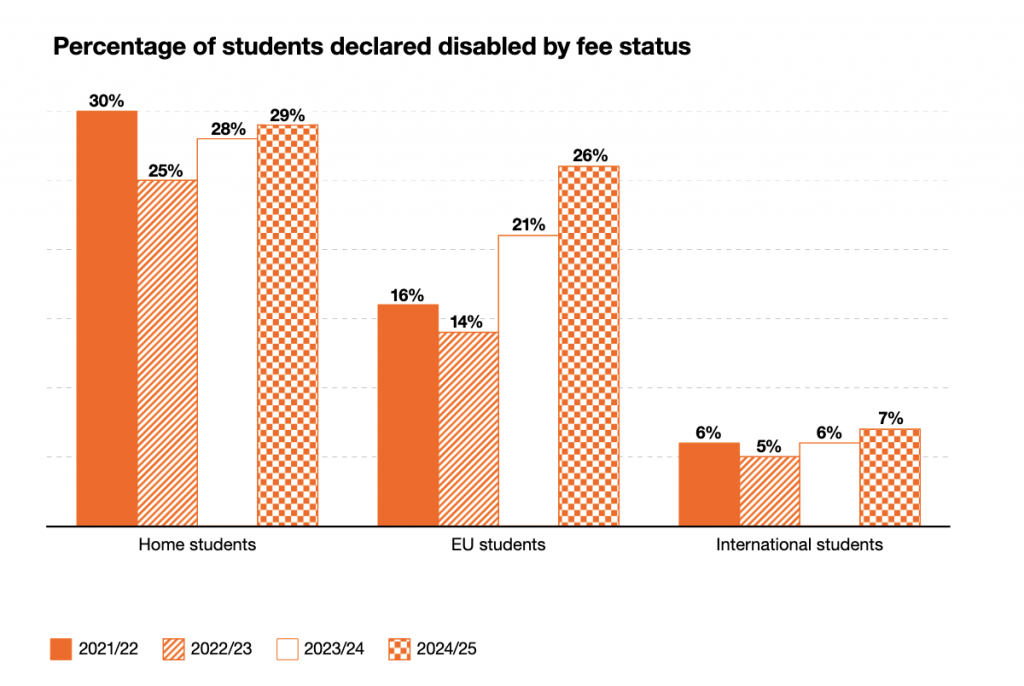
    • Disability. There is a substantial difference between the proportion of Home and International students who declare they are disabled. 25% to 30% for Home students, and 5% to 7% for International students. Is this difference due to lack of access, or lack of diagnosis? 
    • Disability breakdown: 34% of students with a disability declare ‘other or multiple impairments’. Should we ask more nuanced questions? What prompts a student to choose ‘other’, when aware of a disability? 
    Reflection

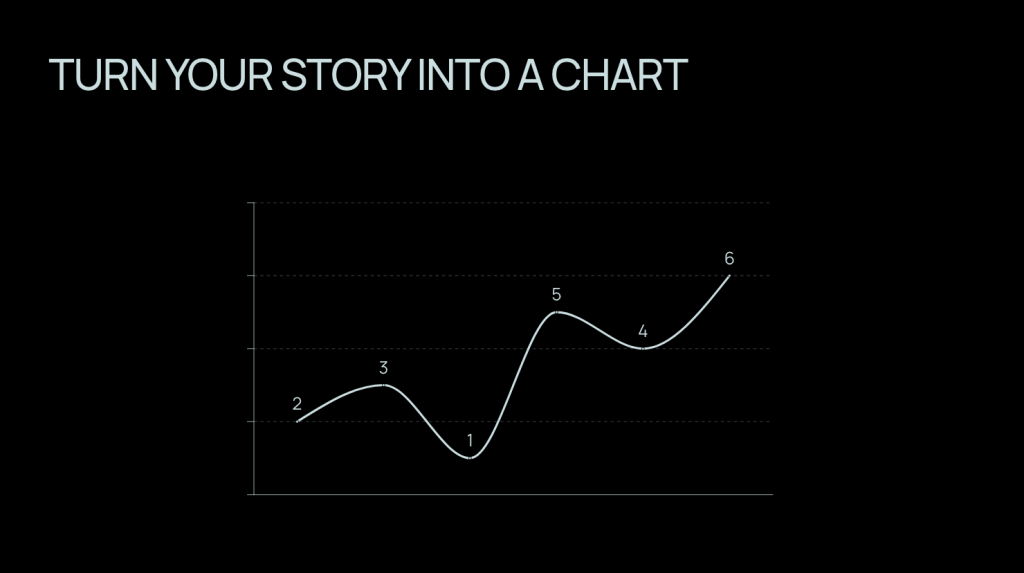
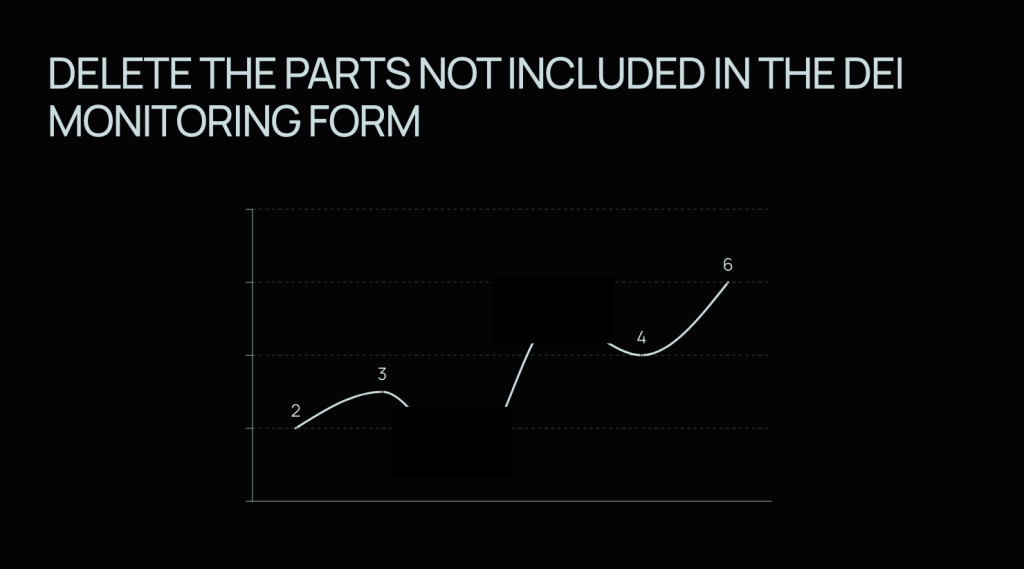
    I’ve already delivered the first part of the intervention, which is now revised. Students, after a lecture on self-narration, completed the task of writing text, scoring the different points and developing an arc of narration as an infographic. When I asked this group of students whether they’d be more comfortable sharing the text they wrote or the line resulted, they overwhelmingly preferred the second option. Only one student out of 23 said they would prefer the first option.

    I’ve received positive feedback from my colleagues, but they have also flagged risks and challenges (addressed below). Most of the feedback I received has been on expanding and clarifying the practical aspects of this intervention, and how this sits within the course curriculum and the programme (Creative Enterprise). Those who shared feedback with me have had the occasion to work with me already, so I will further include feedback from a range of professionals who have a less biased perspective. 

    Equality and inclusion monitoring collect the very data that makes progress visible and quantifiable. It is of immense value to signpost what needs to be addressed and whether policies and strategies have impact. But intersectionality isn’t a sum of all factors; it’s to acknowledge the unrepeatable essence in which identity and experience meet one another.

    Challenges

    • This intervention is heavily reliant on a visual process and output. I should be aware of students with visual impairment beforehand, but not all students with a visual impairment are diagnosed. 
    • I’m asking students to rate events from 0 to 6, which is presenting a challenge for students who have dyscalculia. 
    • This isn’t an occasion for pitting students against the institution they’re in, as it ultimately is holding space for this conversation and interrogation to happen.

    Risks:

    • Students will be asked to look back and look forward in their journey. This is still opening up reflections on what could be negative feelings or potentially traumatic memories. I will remind students that this needs to be an event that fostered positive growth in them. I will also share an outline of the session beforehand, including an outline of the tasks they will be asked to work on and the subjects covered. 

    Action

    I propose embedding this intervention systematically at strategic reflective points within the curriculum, specifically at moments when students are preparing for external critique or assessment. While initially developed for MA Applied Imagination students, the flexibility and emphasis on personal narrative and qualitative data mean it could adapt well across other teaching contexts. In integrating this into my ongoing practice, it reinforces my commitment to a humanistic approach to data collection, aligning institutional DEI objectives with authentic student experiences (Ahmed, 2012; Lupi, 2017).

    Evaluation

    Through this intervention, I’ve deepened my understanding of the complexities around intersectional identity work within education, particularly how visibility can simultaneously empower and risk student exposure. To evaluate effectiveness, I will utilise anonymous feedback, observational notes, and reflective journals to track changes in students’ confidence and criticality around positionality over time. Success indicators might include enhanced clarity in students’ reflective writing and presentations, increased peer dialogues on positionality, and positive self-assessments from students on their comfort level in engaging in positionality work.

    The overall result of the intervention will need to be critically analysed. I found Alice Bradbury Critical Race Theory Framework For Education Policy Analysis helpful, especially ‘Context of practice’, which would be framed not for policy, but for the data collection process: 

    • What is the impact of the *data collection process* on pedagogy and practice? How does the *data collection process* produce practices that result in disparities through seemingly neutral practices? (..)

    Conclusion

    My understanding of the delicate balance between exposure and empowerment has deepened significantly. My positionality, navigating privilege, marginalisation, visibility, and invisibility, has enhanced the understanding of my responsibility in creating spaces where identity exploration is voluntary, critical, and supportive. Ahmed’s critique of diversity performance profoundly informed my reflection and will inform my outlook on reaffirming the need to advocate for meaningful, nuanced approaches within institutional frameworks. This isn’t about trying to provide anonymity, but choice — when this is possible, and to investigate to what extent choice can be provided and exposure is institutionalised. Exposure can be empowering when informed by a conscious decision rather than enforced. 

    Moving forward, I will commit to iteratively revisit this intervention, pursuing deeper engagement with critical DEI literature and professional dialogues. I know my lack of experiential knowledge is not something I can replace with literature, and I will carry this awareness in empathetic dialogue and openness to critique. 

    References 

    Ahmed, S. (2012) On being included: Racism and diversity in Institutional Life. Durham: Duke University Press. 

    Cedillo, C.V. and Bratta, P. (2019) ‘Relating our experiences: The practice of positionality stories in student-centered pedagogy’, College Composition & Communication, 71(2), pp. 215–240. doi:10.58680/ccc201930421. 

    Holman Jones, S.L. and Harris, A.M. (2019) Queering autoethnography. New York, NY: Routledge. 

    Cavarero, A. (2014) Relating narratives: Storytelling and Selfhood. Hoboken: Taylor and Francis. 

    Butler, J. (2025) Giving an account of oneself. New York: Fordham University Press.  

    Green, M. (2025) Narrating self, narrating us: Autoethnography in Black Women’s Storytelling, BERA. Available at: https://www.bera.ac.uk/blog/narrating-self-narrating-us-autoethnography-in-black-womens-storytelling (Accessed: 27 May 2025). 

    Lupi, G. (2017) Data humanism, giorgialupi. Available at: https://giorgialupi.com/data-humanism-my-manifesto-for-a-new-data-wold (Accessed: 15 July 2025).  

    Lyotard, J.-F. et al. (2005) The postmodern condition: A report on knowledge. New York: Manchester University Press.  

    Del Rosso, E. (2024) Imagining a new journalism: EUROPEAN PRESS FUTURE AT THE UAL, European Press Prize. Available at: https://www.europeanpressprize.com/imagining-a-new-journalism-european-press-future-at-the-ual/ (Accessed: 15 July 2025). 

    University of the Arts London (2024) EDI Data Report 2024. London: University of the Arts London. Available at: https://www.arts.ac.uk/__data/assets/pdf_file/0030/472836/UAL-EDI-data-report-2024-PDFA.pdf (Accessed: 15 July 2025).

    Bradbury, A. (2019) ‘A critical race theory framework for education policy analysis: The case of bilingual learners and assessment policy in England’, Race Ethnicity and Education, 23(2), pp. 241–260. doi:10.1080/13613324.2019.1599338. 

  • Illusion of Objectivity in Education

    Reflecting on the provided resources has deepened my understanding of racism in education, particularly regarding the illusion of objectivity within educational systems and higher education institutions.

    Bradbury’s (2020) paper offers insights into the embedded racial biases present in education policy, specifically addressing how seemingly neutral assessment policies disproportionately disadvantage bilingual learners (EAL students). Bradbury employs critical race theory (CRT) to challenge the perceived neutrality of educational assessments, highlighting how policies that neglect race perpetuate systemic inequalities. Her detailed framework underscores the necessity of dismantling structural racism systematically rather than superficially reframing individual subjects or topics.

    Garrett’s (2024) article complements Bradbury’s analysis by exploring how racism shapes career trajectories for racialised minority PhDs within higher education. Garrett critiques Eurocentric career development models, which assume equal access and meritocratic advancement while ignoring structural inequalities. His analysis categorises racism into interpersonal, institutional, and structural dimensions, illustrating how racism systematically constrains career development. Garrett emphasises storytelling and lived experiences, aligning with my belief that narrative inquiry provides authenticity, transparency, and nuance often absent from quantitative methods. This contrasts sharply with practices relying on numerical data, incorrectly perceived as inherently objective.

    The importance of storytelling as an anti-racist educational tool was reinforced by Sadiq’s (2023) TEDx talk. Sadiq highlights that typical diversity and inclusion training often fails due to inherent biases and a lack of diverse perspectives. He advocates storytelling as a powerful means of fostering meaningful conversations and understanding within educational contexts. Sadiq argues that human interaction and shared experiences facilitate real-world learning and empathy-building, enabling deeper engagement and lasting behavioural changes compared to traditional training methods.

    In contrast, the Telegraph’s video (an uncomfortable watch) portrays anti-racist discourse negatively through politically charged terminology such as “woke.” The video targets a specific ideological audience, framing anti-racist efforts as controversial rather than essential human rights considerations. Academic Arif Ahmed’s perspective exacerbates this problematic framing by equating anti-racist initiatives with ideological indoctrination. This trivialises racism and reveals how institutional biases can distort academic discourse. Ahmed’s government-appointed role and the Telegraph’s right-wing bias highlight the necessity for nuanced, informed discussions regarding anti-racism in education. Personally, I found it deeply disheartening to see racism framed merely as controversy rather than recognising its profound impact on individuals’ safety and dignity.

    The Channel 4 video depicting an exercise designed to teach children about white privilege left me with the feeling that even though it was ideated with good intentions, the learning happening at the expense of the emotional labour of black students. They have lived experience and experiential knowledge already. While the educator’s intentions appeared to be towards a proactive anti-racist path, the activity placed significant pressure on students from minoritised communities, forcing them to educate their white peers by being exposed in their own life experience. Witnessing the discomfort and emotional toll this placed on the students was unsettling. The exercise, led by a white teacher lacking experiential understanding, reinforced emotional labour towards letting white students gain a new perspective.

    To me, that was a flawed structure, but at least by having students run toward the opposite side at the end would allow those initially disadvantaged to reach the finishing line first. Maybe, symbolically reversing the narrative could offer a more empowering experience and fostering critical discussions on structural privilege. The absence of actionable strategies or frameworks in this exercise highlighted how essential it is to pair experiential activities with robust tools and support. Maybe that happened afterwards, but no further context was provided in the video.

    These resources, whether intentionally or not, emphasise the urgent need for comprehensive, critically informed, and empathetic anti-racist strategies within educational contexts. Effective anti-racist education requires genuine engagement with systemic inequalities, critically evaluating policies and practices through frameworks like CRT, and embracing narrative and lived experiences. Incorporating storytelling provides a powerful alternative to traditionally accepted yet flawed quantitative methodologies. Ultimately, fostering genuine understanding and actionable change necessitates strategies prioritising nuance, inclusivity, and the experiential expertise of individuals from minoritised communities.

  • Formative Assessment

    Intervention: ‘Prefer not to say’

    Identity is both self-defined and socially negotiated, meaning it exists at the tension between how one sees oneself and how one is seen by others. In this intervention, I will be facilitating the process of dissecting the relational aspect of self-narration: defining a creative practice is a deeply personal, vulnerable process when we’re asking students to have that informed by their own identity, where the individual, the social, and the cultural intersect.

    This workshop explores how the stories we tell about ourselves shift depending on who we imagine is listening, and we need to consider our own self as an audience too. The session unpacks identity as a relational process rather than a fixed essence. Students are guided through reflective writing tasks in which they craft versions of an autobiographical account: written for themselves and written for an institutional context. Through group discussion and collaborative reflection, the workshop examines how audience, power, and positionality shape the narratives we construct. The intervention foregrounds storytelling and dialogue as technologies of reflection, allowing students to surface learning edges and explore how their creative identities are negotiated across social contexts. Ultimately, the workshop encourages a more nuanced understanding of self-narration, highlighting its vulnerability, ethics, and potential for collective insight. It aims to promote inclusive learning by validating lived experience as an important site of academic inquiry, particularly for those navigating intersecting identities and systems.

    First, students write a private narrative intended only for themselves, encouraging an introspective encounter with identity unmediated by external gaze. 

    Next, they craft a version addressed to an institutional audience, such as a university, employer, or funding body, foregrounding how power and expectation shape self-presentation. 

    They will ultimately develop a hybrid narrative that considers how the personal and institutional intertwine. This layered approach offers a structure for unpacking how identity is performed, constrained, and reimagined in different relational contexts. Through reflective dialogue, students begin to surface what parts of their story are amplified or silenced, by whom, and why. The process enables critical awareness of narrative as a tool for both representation and resistance, one that reveals how identity is not merely expressed, but co-authored.

    Giving an Account Of Oneself

    By investigating the way we have assembled a narrative account of a meaningful event, it becomes possible to observe the meaning we have taken from that experience. On a collaborative lens, engaging in a collective exchange about a story or a question, we build our learning of it and uncover the value of that story or question in the larger context of our work. It is through the exploration of stories and the practice of dialogue that we can unpack the richness of experiences and evaluate which issues emerging from that experience we need to pursue. It becomes possible to identify learning edges, questions or issues that an individual or group is seeking to understand. Reflective practice is fundamentally structured around inquiry. The most powerful “technologies” for examining experience are stories (narrative accounts of experience) and dialogue (building thinking about experience out loud). 

    Cavarero wrote Relating Narratives: Storytelling and Selfhood, in which she developed an original theory of selfhood as a “narratable self”. Cavarero claims that we perceive ourselves as narratable, as protagonists of a story that we long to hear from others. This desire for a story, for our story to be told, becomes the guiding element in the new approach to identity. Our identity is not possessed in advance as an innate quality or inner self that we are able to master and express. It is rather the outcome of a relational practice, something given to us by another in the form of a life story or a biography (Cavarero, 2000). 

    In Giving An Account Of Oneself, Judith Butler analyses how social norms shape our sense of self and our moral obligations. Butler argues that ethical reflection requires acknowledging the social conditions under which we emerge and the norms we are asked to act under. Butler argues that ethical reflection requires a turn to social theory to understand the social character of our own unknowingness about ourselves. According to Mel Green, whose doctoral research focuses on the identities of distance educators and the experiences of Black mothers raising autistic children in the UK, personal narratives are important in academic discourse, highlighting methodologies that reflect and respond to the lived experiences of marginalised, racialised and gendered groups. (Green, 2025). Storytelling is not merely a pursuit of knowledge; it is a quest for representation. Autoethnography holds disruptive power, offering an ‘understanding of how experiences within cultures are enlarged and/or constrained by relations of power, oppression, and privilege’ (Jones & Harris, 2020). 

    • Cavarero, A. (2014) Relating narratives: Storytelling and Selfhood. Hoboken: Taylor and Francis. 
    • Butler, J. (2025) Giving an account of oneself. New York: Fordham University Press.  
    • Green, M. (2025) Narrating self, narrating us: Autoethnography in Black Women’s Storytelling, BERA. Available at: https://www.bera.ac.uk/blog/narrating-self-narrating-us-autoethnography-in-black-womens-storytelling (Accessed: 27 May 2025). 
  • Intersectional Faith and Power

    Using intersectionality as a lens, each source reveals a knot where religious identity crosses another axis of power: race, gender, and socioeconomic status interplay in the process of knowledge production.  Appiah’s history shows that religion itself is a colonial byproduct: European explorers treated non-Christian cosmologies as othered. Singh’s turban still activates a colonial gaze. 

    Jawad details how modesty rules become restrictive and publicly policed when they attach to women’s bodies. The same Qur’anic passages commend chastity for men, but it is hijabi women who are excluded from Olympic fields or school teams. Rekis notes that Sojourner Truth was doubly silenced: white Christianity ignored her theology, and secular feminism stripped the faith from her activism. Belief became a reason to rank her testimony as less rational and less political.

    Across the resources, two patterns repeat:

    Hyper-visibility and erasure: The veil or turban draws attention that renders the wearer hyper-visible as “other,” yet their own explanations are erased. A Muslim athlete may have to remove a hijab to compete, literally disappearing her faith in order to be seen as an athlete.

    Gatekept spaces: Erasure is in resistance in co-designing spaces where individuals at intersections can access. Whether the lecture hall (Rekis), the locker room (Jawad), or airport security (Singh), institutions establish apparently ‘neutral’ rules: naturalism in academia, uniform codes in sport, deciding what to expose and what to privatise. This is a privilege for bodies and voices that are shaped by whiteness, maleness, or secular norms.

    Jawad’s “Accept and Respect” proposal offers a template: design dress regulations around safety and performance, not around Western customs and standards. Similarly, university syllabi can recognise faith-inflected epistemologies as legitimate knowledge, not private ‘beliefs’. When Singh chats with passengers who are not confronting their internalised racism, he is doing micro-level testimony repair; educators can scale that up by foregrounding insider voices, especiallybecause the emotional labour shouldn’t be on the ones who have lived experience of racism. 

    Treating faith as a siloed identity misses how it entwines with race, gender, class, and the politics of knowledge. According to Appiah, the very concept of religion is a colonial artefact; while Rekis maps the epistemic fallout when these layers collide. Faith becomes most contested where other power lines cross it. Our task is not to rank which axis matters more but to redesign the spaces where those axes meet, so that no one has to shed either their identity to participate. Intersectionality is indispensable for diagnosing, challenging, and redressing the layered epistemic wrongs that silence voices.

    UAL’s census (2023) records that just under half of our students declare a faith: 18 % Muslim, 9 % Christian (non-Anglican), 5 % Hindu, 3 % Sikh, 2 % Buddhist, with a further 10 % selecting “spiritual/other.” Our cohort is also 55 % international and 68 % students of colour.  To disrupt classroom gatekeeping, I integrate an investigative journalism workflow in which students “pass the mic” to practitioners and work on a short positionality statement that clarifies power relations are at play.

    On a very powerful instance, a journalist was asked from a student ‘how do you get closest to truth’. The journalist replied: ‘I’m not sure I can talk about truth, but I can for sure talk about honesty.’

    This requirement of first-person evidence enriches their projects’ factual base and counteracts the hyper-visibility/erasure dynamic. When a speaker is made audible on their own terms, a researcher practises careful listening rather than ventriloquism.  Making my lens explicit signals to students that every act of knowledge-making is perspectival and that intellectual honesty begins with acknowledging where one stands before inviting others to speak.

  • Opportunity, not disability, defines ability.

    Across all resources, disability is understood not as stemming from the individual but as a result of external barriers: physical, societal, and attitudinal. The social model of disability runs as a foundation: it is the failure of environments and systems to accommodate human variation that disables people, not any intrinsic limitation. Building on this, Ade Adepitan highlights how systemic neglect, often shaped by racism, embeds exclusion into the very structure of society, showing that ability is linked to opportunity rather than innate capacity. Christine Sun Kim deepens this view by drawing attention to how disability can also operate through cultural erasure and miscommunication, illustrating that social misunderstanding disables as much as physical inaccessibility. Shay Brown, meanwhile, focuses on the hidden aspects of disability: unspoken norms, mental health struggles, and the less visible intersections with other marginalised identities. Together, these perspectives frame disability as something socially constructed and systemically maintained, always shaped by broader forces of power and exclusion.

    Inclusion is understood as a fundamental redesign of shared spaces we all share: accessibility can’t be an afterthought or an accessory, but the fundamental ethos of interaction. Adepitan insists that true inclusion requires a systemic overhaul, linking the need for accessible environments with the broader fight against racial injustice and exposing the inadequacy of temporary or separate fixes. Christine Sun Kim pushes this even further, challenging narrow definitions of accessibility by insisting on cultural access — the ability to communicate, to exist, without apology or constant translation. Through her work, she forces hearing audiences to confront the presence of Deaf culture in everyday life. Shay Brown brings a practical urgency to these ideas, stressing that accessibility must be proactively built in from the beginning: asking questions, budgeting for it, and valuing it as essential rather than optional. Across these different perspectives, a shared idea emerges: Inclusion is not about making exceptions but about fundamentally shifting how we design spaces, communities, and interactions so that everyone belongs from the start.

    Disability cannot be understood in isolation. A deep awareness runs through all the speakers’ work that disability cannot be separated from other aspects of identity. Christine Sun Kim shows how her Deafness is inseparable from cultural and linguistic identity, revealing how access to language and culture is as critical as access to physical spaces. Her experiences of belonging and alienation within both Deaf and hearing worlds point to identity’s layered, complex nature. Overlapping, shifting experiences of privilege and marginalisation characterise spaces that might appear or claim to be inherently inclusive. Brown amplifies this understanding, emphasising on how disability intertwines with gender, sexuality, neurodivergence. Their perspectives dismantle notions that disability can be comprehended in isolation, painting a picture of identity as dynamic, multifaceted, and constantly shaped by broader systems of power and belonging. Adepitan highlights how race and disability intersect through shared patterns of invisibility and exclusion. Systemic oppression operates along multiple axes at once. 

    Disability as a structural force is ingrained both structurally and relationally. UAL data shows that around 20% of students declare a disability, learning difference, or mental health condition, and many more are likely undiagnosed. Starting from the assumption that disability is present even when invisible, I design my approach to be proactively inclusive rather than reactively accommodating. Christine Sun Kim’s reflections on her academic journey resonate strongly here: she highlights how many learning opportunities were denied to her because pedagogy and institutional design were inaccessible to a Deaf student. In line with universal design principles, I ensure that accessibility is not treated as an add-on but as an embedded standard. When tools are offered to everyone, they avoid singling out any student; they normalise access, reduce stigma, and allow needs to remain private if students wish. Non-stigmatising tools are essential, especially given how many disabilities are invisible, undiagnosed, or disclosed only selectively.